Most fishing towns ask you to make a trade. You get close to good water and you give up everything else, so the anglers have a great week and everybody who came along reads a book in a motel room. Ellicottville does not make you take that deal, and the reason is geography.
The village sits in the middle of two very different fisheries. Drive north for about forty minutes and you are standing in a Lake Erie tributary in the middle of the steelhead run. Drive south and you are into the trout and warmwater rivers of the Southern Tier and the Allegheny country. Stay put and there is a stocked trout creek running through town.
Then there is the part that actually decides whether a group trip happens: Ellicottville is a two-resort ski village with a real main street. Lodging, dinner reservations, coffee, a brewery, a spa, and a chairlift are all inside a few walkable blocks. The anglers leave in the dark and come back at four. Everyone else has a full day without a car. Dinner is at seven and nobody had to compromise.
Why the geography works
Look at a map with the fishing in mind and Ellicottville is sitting on a hinge.
- North, about 40 minutes: Cattaraugus Creek around Gowanda, the largest of New York's Lake Erie tributaries, which DEC says supports one of the lake's top steelhead runs.
- In town: Great Valley Creek, which the DEC stocks with trout inside the town of Ellicottville every spring.
- South: the Allegheny River drainage and the Southern Tier lakes, where the target list runs to trout, smallmouth, pike, musky and carp depending on the month.
- Further north: the rest of the Erie tributary chain, from Eighteen Mile and Cazenovia up toward Buffalo, on a longer morning drive if the Catt is blown out.
That spread matters more than any single piece of water, because steelhead fishing is weather. A creek that was perfect yesterday can be blown out and the color of chocolate milk this morning. Basing somewhere with one river nearby means a lost day. Basing here means your guide picks a different watershed at 5am and you still fish.
The fall steelhead run
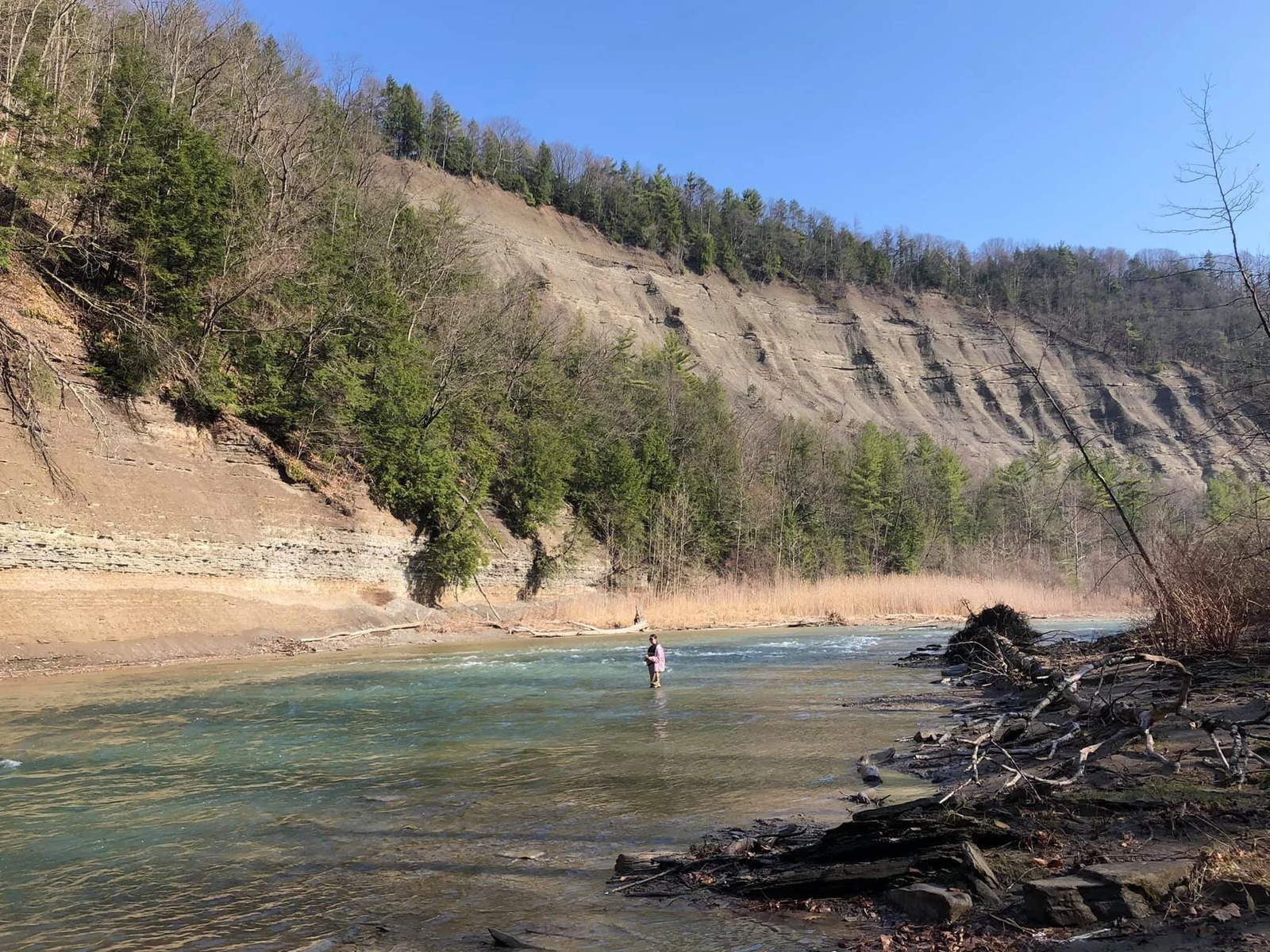
This is what most people come for. According to New York State DEC, thousands of steelhead ascend the Lake Erie tributaries from October through April. The bulk of the run, made up of Washington strain fish, comes from mid-October through April. Early Skamania strain fish can enter Cattaraugus Creek as soon as late August.
The state stocks about 230,000 Washington strain yearlings a year across nine major tributaries: Cattaraugus, Canadaway, Chautauqua, Eighteen Mile, Buffalo, Cayuga, Cazenovia, Silver and Walnut Creeks. Cattaraugus Creek also gets surplus Skamania strain fish when they are available, and it holds natural reproduction in its feeder streams on top of the stocking.
There is a spring run too, and it fishes well. But fall is the one with a reputation, partly because the fish are fresh and partly because the woods around these gorges are at peak color while it happens. A late October morning on the Catt with the hillsides lit up is the argument for the whole trip.
Access above Gowanda
Upstream of Gowanda, waders have public access to more than ten miles of Cattaraugus Creek through the Zoar Valley Multiple Use Area and DEC public fishing rights holdings. That is a lot of water to spread out on, and it is the stretch a New York State fishing license covers.
Know where you are standing. Downstream of Gowanda, Cattaraugus Creek runs through the Cattaraugus Territory of the Seneca Nation. That water requires a Seneca Nation fishing license rather than a New York State one. It is the most common mistake visiting anglers make here. Confirm the current rules and permit process with the Nation before you fish below Gowanda.
Inland trout, and one creek that needs a rest
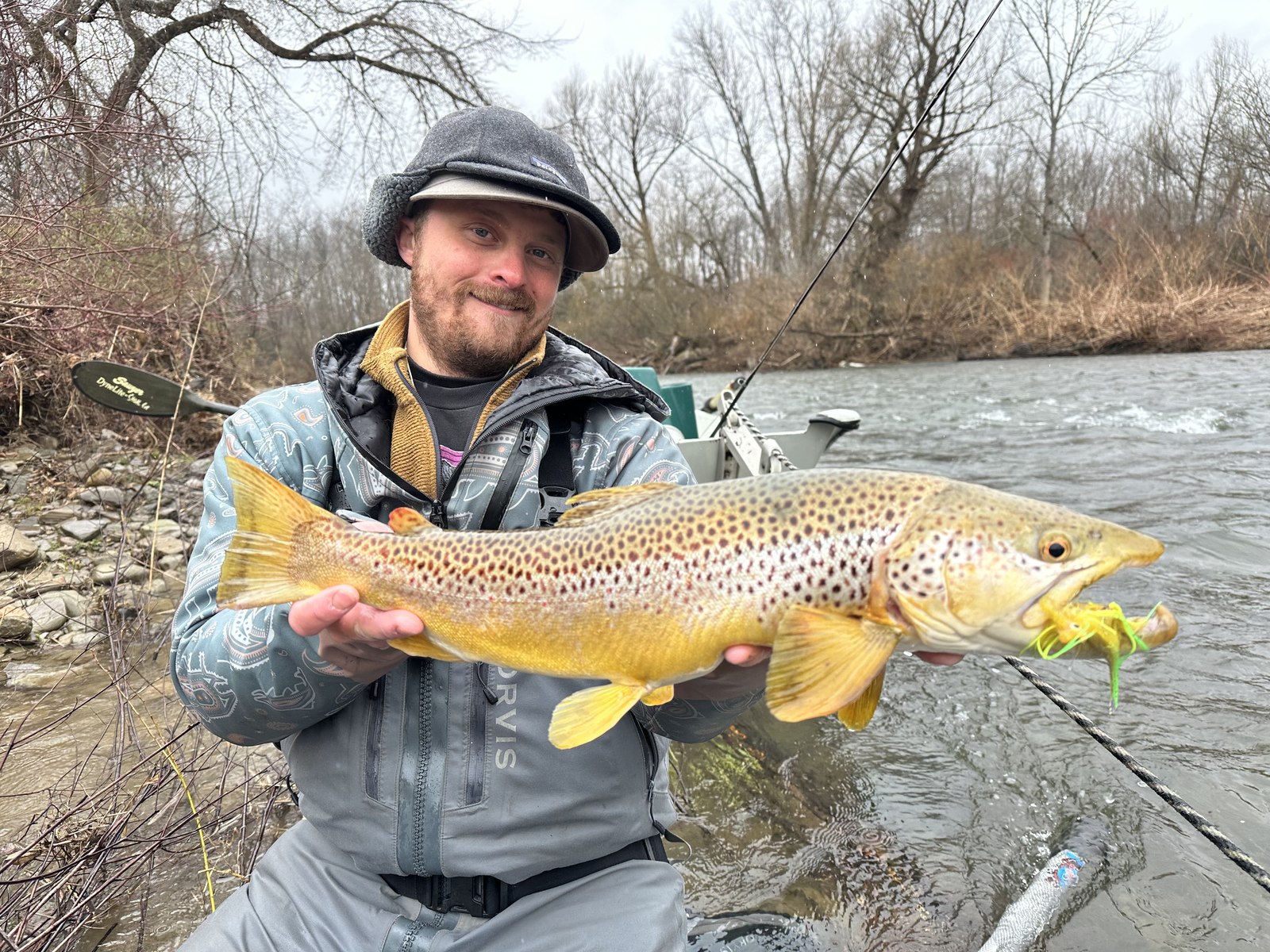
The steelhead get the attention, but the brown trout fishing in this county is the quieter reason to come back. Great Valley Creek runs through Ellicottville itself and the DEC stocks it in the first week of April, in the town of Ellicottville and again downstream in Great Valley. Elton Creek in Freedom takes a much larger load of browns in late March, including fish in the twelve to fifteen inch range.
The honest note belongs to Ischua Creek, which is normally one of the better stocked trout streams in the area. After a discharge killed fish and aquatic insects in the summer of 2025, the DEC paused stocking in 2026 in the affected reach, from the Farmersville and Franklinville town line downstream to Five Mile Road, to let the food base recover. Stocking continued outside that stretch. Recovery is expected to take several years. Check the current DEC stocking list for Cattaraugus County before you plan around any of these creeks, because the numbers and the closures change year to year.
It is not only a fall fishery
Fall is the headline. The calendar underneath it runs all year. Winter and early spring are steelhead months on both the Erie and Ontario sides. May brings the smallmouth push. Summer is musky and carp and the hatches on the Allegheny drainage, which is drift boat water rather than wading water. Lake-run brown trout, lake trout and king salmon fill in the rest.
If you are building a trip around a week you already have off, that matters. There is very rarely a bad month to fish out of here. There are only different fish.
Who to book
You can figure out the Erie tributaries on your own with a public fishing rights map and enough mornings. Most people would rather not spend their vacation doing the reconnaissance, especially on water that changes with every rain.
Nick Sagnibene, 716 Fly Fishing
Nick is a Buffalo native who runs a year-round guide operation across Western New York and into the Allegheny country. His own bio names the connection that matters to us: he "started his professional guiding career in the small ski town of Ellicottville." He now works out of The Hairy Trout in West Seneca, and he guides the Lake Erie and Ontario steelhead runs, musky on the Southern Tier lakes and rivers, and drift boat trout trips through the Allegheny hatches.
He runs walk and wade trips and float trips, and he fishes twelve months a year, which is the useful thing when your dates are fixed and the weather is not.
Trip types and rates
| Trip | Length | Included | Rate |
|---|---|---|---|
| Walk & wade, half day | About 4 hours | Rod, reel, line, flies, tackle, snacks | $400 |
| Walk & wade, full day | About 8 hours | All of the above plus lunch | $525 |
| Float, half day | About 5 hours, drift boat | Rod, reel, line, flies, tackle, snacks | $425 |
| Float, full day | About 8 hours, drift boat | All of the above plus lunch | $550 |
Rates are for two anglers and were the posted prices as of August 2026. Single angler pricing may vary. A $200 deposit holds the date, and float trip availability depends on the season and the target species. Confirm everything directly with Nick when you book, and check his current rates rather than ours if there is any gap between the two.
The other half of the group
This is the part that makes Ellicottville work as a basecamp rather than just a place to sleep. A fishing day is long and it starts early. If the people who came along are stuck, the trip does not get repeated.
They are not stuck here. Washington Street is walkable, the shops are open, and the fall hiking above the village runs right through peak color. Our guide to five hikes for peak color lines up almost exactly with the fall steelhead window. There is a chairlift for a summit view, a salt cave, a winery, and Griffis Sculpture Park a short drive away with 250 sculptures scattered through the woods.
That is a partial list. Hand them our full rundown of things to do in Ellicottville and let them build their own day while you are standing in a creek.
If they ride instead
Sometimes the split in a group is not anglers against non-anglers. It is anglers who also ride. That timing works out here better than it has any right to: HoliMont runs lift-served mountain biking Friday through Sunday until November 1 this season, which overlaps the opening weeks of the steelhead run almost exactly. Creek in the morning, laps off the Sunset Chair in the afternoon, same day.
Our HoliMont Bike Park guide has the days, hours and ticket prices. Check it before you drive in late October, because riding from mid-October on is weather dependent and the lifts do not spin for the sake of it.
Where the group meets back up
Dinner is the point of the day. The village covers a wide range of it, and all of these are in our village directory with hours and links.
- Sit down and take your time: Dina's Restaurant, West Rose, Trattoria Partenope, Villaggio and the Silver Fox Steak House, for the night you order a bottle and stay a while.
- Bar and brewery: Ellicottville Brewing Co, Balloons Restaurant and the Gin Mill, which is where a group that has been standing in cold water since six actually wants to end up.
- Morning, before you drive to the creek: Alpine Bistro, the Ellicottville Bake Shop and Katy's Cafe & Cake Creations for coffee, a breakfast sandwich and something to eat in the truck.
Where to stay
Lodging here runs from slopeside condos to village houses to the resort hotels, and the right answer for a fishing group is usually a house with a kitchen, a mudroom and somewhere to hang waders. We wrote the whole thing up separately in the complete Ellicottville lodging guide, including who to book with and what each neighborhood is actually like.
One practical note on fall dates. The steelhead run overlaps with peak foliage and with the village's busiest fall weekends, so lodging books out earlier than you would expect for a shoulder season. Look at the events calendar before you pick a weekend, either to join the crowd or to dodge it.
Licenses and practical details
Anyone 16 or older needs a New York State freshwater fishing license. Current DEC fees are $25 for a resident annual license and $50 for a non-resident annual, $12 or $28 for seven days, and $5 or $10 for one day. A license runs 365 days from the date you buy it, so an annual is worth the math if you expect to come back for the spring run.
What the creeks are doing right now
These are the two gauges that decide a day out of Ellicottville: Cattaraugus Creek north of town and the Allegheny south of it. Readings are live from the USGS.
Beyond that, the short list:
- Sort your flies before you get here. There is no fly shop in the village, so do not plan on buying tippet and leaders at eight the night before. Ask Nick ahead of time. He works with a shop, he knows what the creeks are eating that week, and he can tell you what to bring or put it in your hand on the day.
- Layers and the right waders. October water is cold and November water is colder. Guided trips supply rods, reels, flies and tackle, but bring your own waders and boots.
- Watch the flows. These creeks rise and clear fast, and flow decides your day more than the forecast does. We run live USGS readings for Cattaraugus Creek at Gowanda and the Allegheny at Salamanca, the two gauges that matter from here, on our fishing and paddling page. Nick keeps a water conditions page pointed at the same Cattaraugus gauge. Weather and the resort webcams are on our conditions page, and any guide worth booking will move you before you waste a morning.
- Handle fish well. Keep them wet, keep the grip gentle, and let them recover before they go. The steelhead in these creeks are a public resource that a lot of people share.
If you want the wider picture of the water around town, including paddling and the warmwater fishing, start with our fishing and paddling overview.